

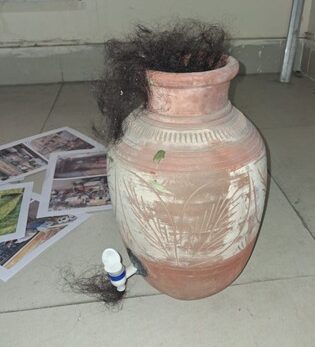
“Whose hair is this?” you cry, indignation rising. “So long—must be Gehna’s! Can’t she be more careful? She’s ruined my meal and my mood!” You bellow, “Gehna! Where are you hiding? Get this plate out of my sight!”
Now, here’s a curious twist: short hairs—presumably from the gents—rarely spark such a scandal. Is it just their length, or something deeper? Did our hairy ancestors in the caves fuss over such things? Doubtful. And consider the swaggering heroes of Indian epics like the Ramayana and Mahabharata—Arjun and Karna, strutting about with long locks and earrings. Back then, hair length wasn’t a gender memo. So, when did we start pinning femininity to flowing tresses and masculinity to a buzz cut? Probably when society, in its boundless creativity, decided long hair screams “feminine beauty” and short hair grunts “manly grit.” Yet history smirks at us: ancient warriors waved their long manes like victory flags, and today’s Bollywood heartthrobs rock luscious locks while oozing “dabbang” charm (that’s “badass” with a desi twist). So why the fuss? Are we just knotting ourselves up in silly rules?
This hairy hullabaloo traces back to a research project by Sudiksha, a sharp student at Ambedkar University Delhi. Sudiksha argues that hair is your best friend atop your head, but the moment it falls, it’s an outcast, worthy of a spit and a toss. In some corners of Purvanchal, women even spit on fallen strands to pin them down, lest they float off and catch a witch’s eye. It’s a custom so absurd it’s hilarious, yet it makes you ponder: our hair obsession is bonkers. On the scalp, it’s a beauty queen; on the floor, it’s trash. Talk about a dramatic demotion!
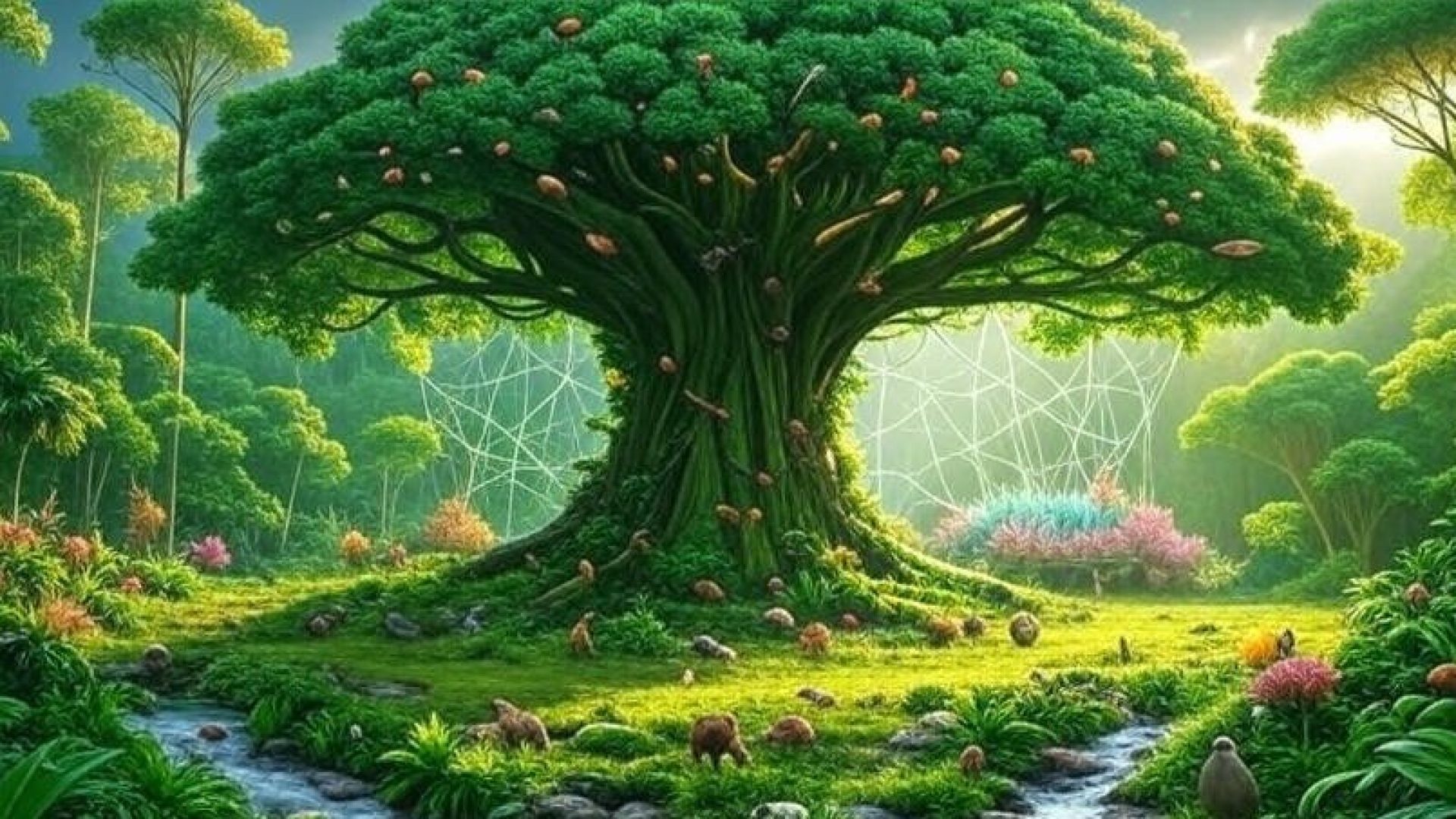
Let’s talk cleanliness—specifically, the pesky problem of fallen hair. On a pristine floor, a single strand jabs at you like a splinter, practically taunting, “Notice me!” Science shrugs it off: losing 100 hairs a day is routine. But these former stars of your crowning glory turn into unwelcome squatters once they drop, like flowers yanked from a bouquet, suddenly irrelevant. Now, let’s spin this into nature’s realm. Picture species in ecosystems as strands in a hermit’s wild, matted locks, each one blending into a chaotic whole. Enter humans, wielding the comb of civilisation—slashing forests for fields, slapping concrete over jungles. In our zeal for “tidiness” (or “gentrification,” as the fancy folks call it), we’ve played hairdresser, snipping what doesn’t fit our style. The fallout? Species—those snapped strands—pile up on the ecosystem’s floor, impossible to miss.
Sure, a bit of hair loss is natural, just as species wink out over time. But here’s the rub: over the last few centuries, we’ve cranked up this “hair fall” by 100 to 1,000 times—practically a windfall for some imaginary eco-hair-transplant startup! The IUCN Red List clocks this as the sixth mass extinction, with species vanishing faster than free snacks at a party. Is nature headed for a bald patch? Maybe, and we’re just gawking at the spectacle. Conservationists scramble with “rewilding” schemes, planting species like a bad toupee on nature’s scalp. It might fool you from afar, but up close, the barren truth glares back. Academic journals sprout green promises like hair-growth ads, but the jungle stays sparse. Faking nature’s intricate braid with artificial strands? That’s a laughable delusion.
Ever tried flushing hair down the drain? It just clogs everything, much like our half-hearted stabs at saving biodiversity. Ignoring nature’s web of connections only deepens the mess, leaving us pointing fingers while the losses mount. Finding a hair in your food or on the floor is as ordinary as a species fading out. If a long-haired maestro is cooking your feast, a stray strand is par for the course—call it culinary collateral! Likewise, when we plunder nature’s pantry, we snap countless “hairs”—species and their ties. Sweeping them under the rug or binning them won’t do. One day, nature might spin around and demand, “Hey, where’s my fabulous mane?” And we’ll be left stammering, bald-faced and clueless.