

On 11 August 2025, the Indian Supreme Court (SC) ordered local governments in Delhi and the National Capital Region (NCR)—a 4,500 km² region—to capture and relocate an estimated 2.5 million free-ranging dogs into shelters within eight weeks. The directive aimed to mitigate India’s enormous burden of ~20 million annual dog bites and ~20,000 annual human rabies deaths, nearly 40% of global fatalities. Yet, after nationwide protests and a petition with 370,000 signatures, the SC reversed its mandate 11 days later, instructing authorities to sterilize, vaccinate, and return dogs to their territories while prohibiting roadside feeding.
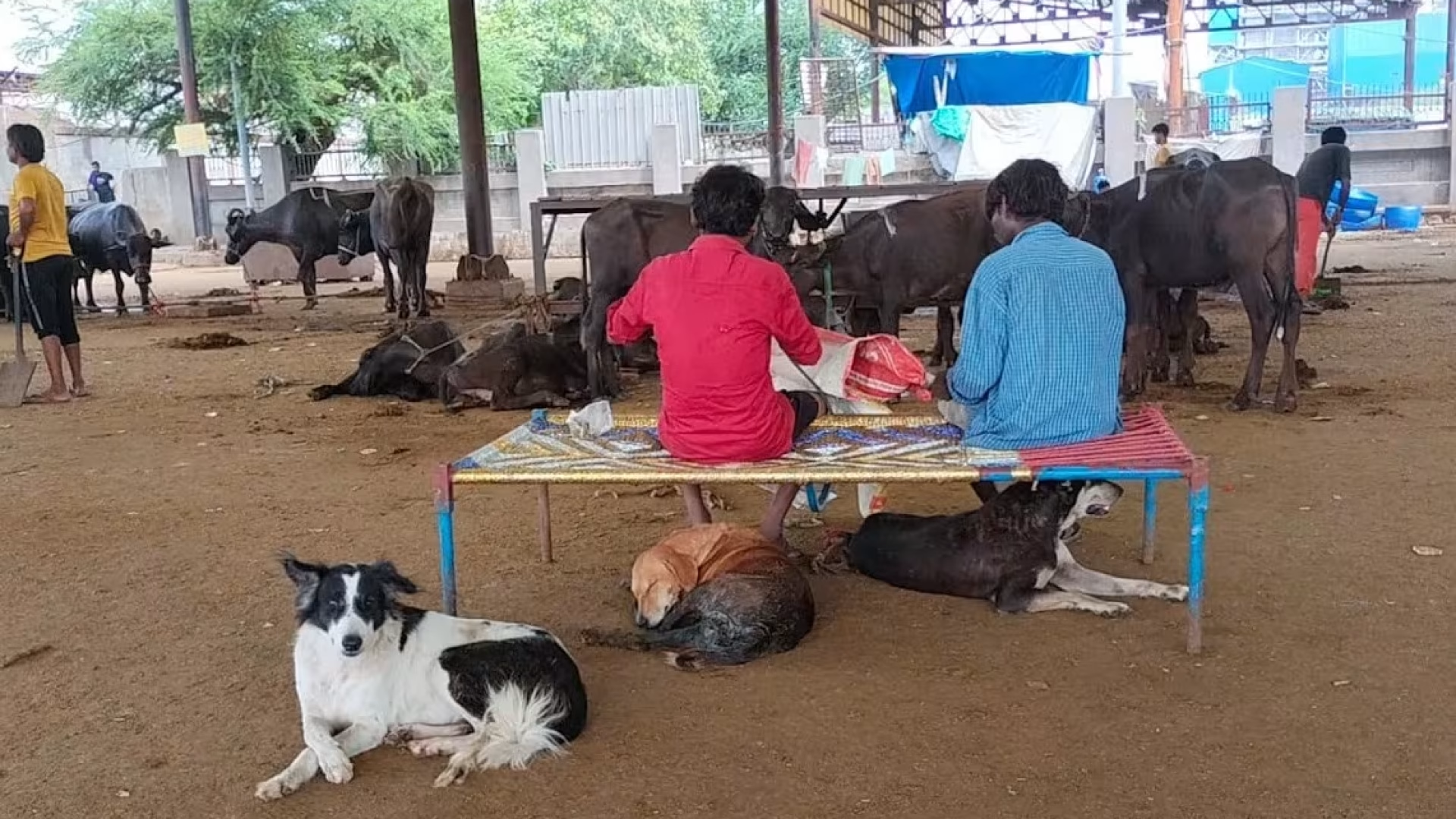
Surprisingly, on 7 November 2025, the SC re-revised its order, reinstating the directive to remove dogs from hospitals, transport hubs, and educational institutions, and relocate them to shelters—despite such facilities not existing at required scale. The court also ordered fencing to prevent re-entry and removal of cattle from highways.
Why did a public-health-driven policy trigger such fierce opposition that the SC pivoted repeatedly within weeks? This paper examines the socio-ecological, cultural, and operational dynamics that underlie India’s urban dog crisis and outlines evidence-based solutions that address root causes rather than symptoms.
Read the full policy paper here:
India hosts over 80 million free-ranging dogs, part of a global population exceeding 800 million. These animals coexist with humans across rural, peri-urban, and dense metropolitan spaces—creating challenges that span public health, welfare, ecology, governance, and environmental justice.
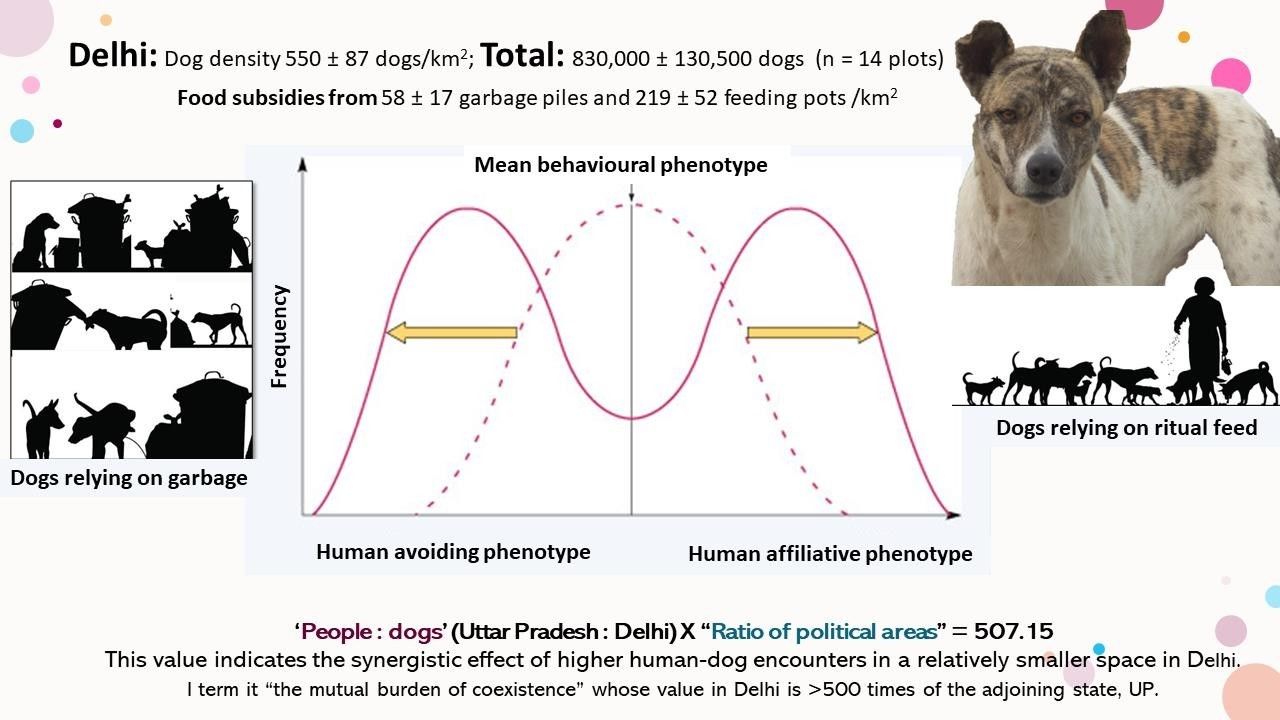
Delhi exemplifies extreme dynamics: despite being far smaller than neighboring Uttar Pradesh, it sustains dog densities 70 times higher, with ~800,000 dogs and 35 million people within 1,500 km². The city also supports 327,069 feeding sites and 85,109 garbage points, driving abundance of anthropogenic food.
Over the past 25 years, Delhi’s built-up area, human population, dog population, vehicle density, income levels, and organic waste volume have all risen by 200–300%. Escalating consumption fuels waste, which in turn sustains large populations of free-ranging dogs, macaques, rodents, and black kites—forming a tightly coupled social-ecological system.
This phenomenon is not Delhi-specific. Other rapidly urbanizing Global South cities—Bengaluru, Karachi, Nairobi, Dhaka, Vientiane—face similar convergence of high density, abundant waste, cultural feeding practices, and expanding dog populations. Recognizing this, the SC extended its 11 August directive nationally. Meanwhile, global health agencies have set the target of eliminating dog-mediated human rabies by 2030.
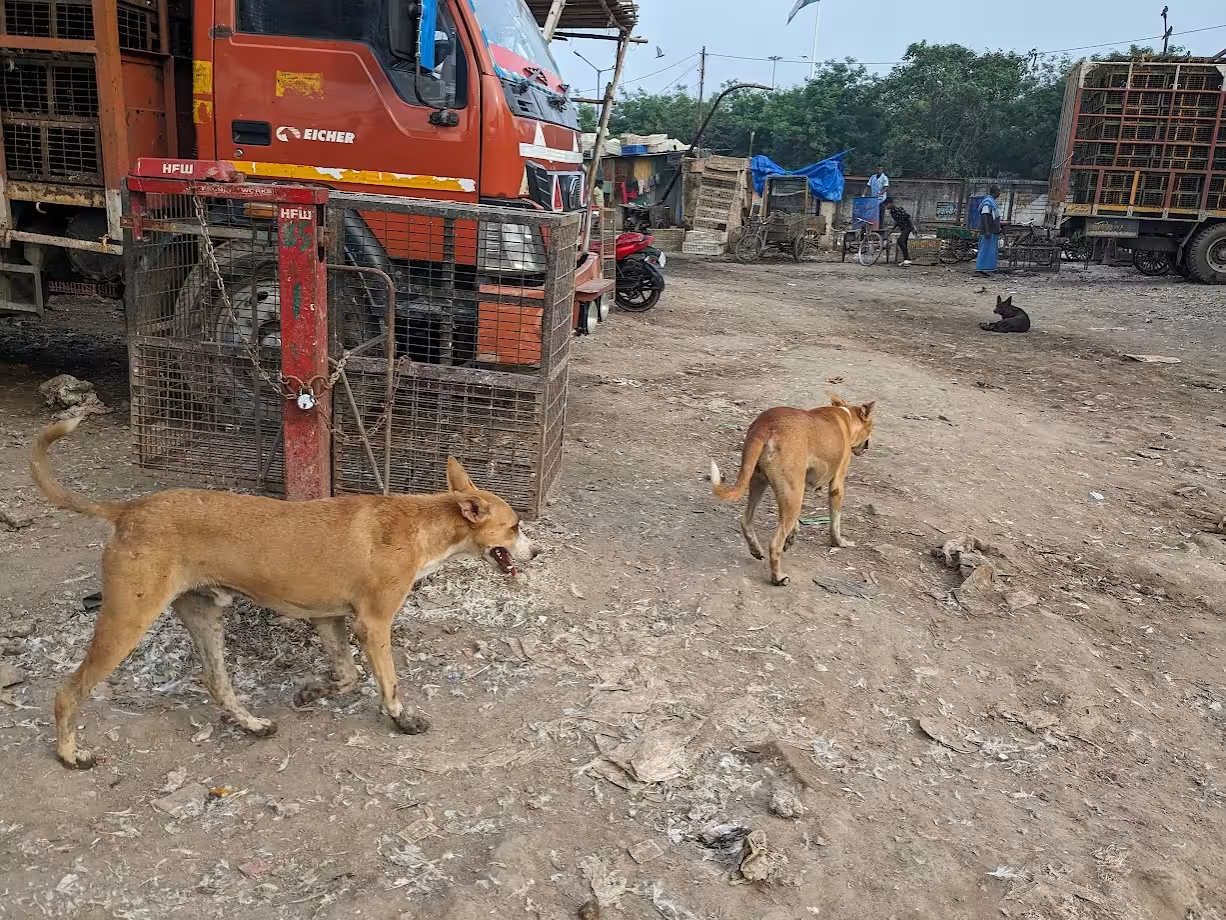
Urban dog ecology is shaped overwhelmingly by human-generated food subsidies. Indian cities produce 150,000 tonnes of solid waste daily; each person produces roughly 50 kg of food waste annually. Unmanaged garbage dumps become stable food sources that promote high reproductive success and survival.
Intentional provisioning—religious offerings, compassion-driven feeding, and community feeding—further concentrates dogs in high-activity zones. Prosperity paradoxically magnifies these conflicts: higher incomes generate more waste and enable more animal feeding, which fuels higher dog densities.
The collapse of vulture populations in South Asia has also caused ecological “competitive release,” allowing dog and rat populations to expand.
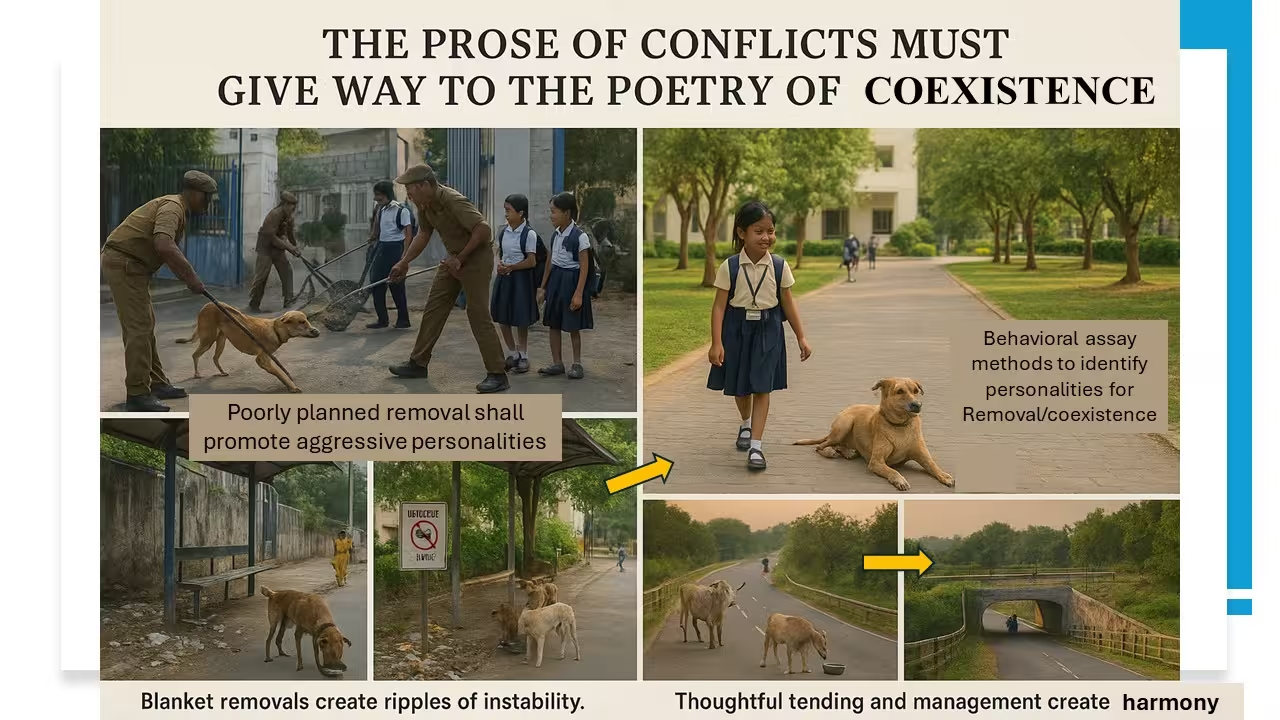
The SC initially asked authorities to remove 5,000 dogs from “high-risk areas” as Phase 1, followed by full removal of 2.5 million dogs from the NCR within eight weeks. This strategy failed on multiple fronts:
Delhi lacks infrastructure to house even a fraction of its free-ranging population. Creating adequate shelters would require years of construction, millions of square feet of space, large budgets, and sustained management.
Removal contradicts longstanding global consensus favouring catch-neuter-vaccinate-release (CNVR) protocols. Removal triggers the vacuum effect—dogs migrate from peripheral areas to refill emptied territories as long as food resources remain.
Mass confinement without proper infrastructure risks:
disease outbreaks (distemper, parvovirus, respiratory infections),
stress, aggression, and behavioural deterioration,
high mortality under crowded conditions.
Religious feeding practices—motivated by compassion and non-violence (ahimsa)—clashed with the removal mandate. India’s historical tolerance for animals in shared spaces further intensified resistance. Communities, however, remain internally conflicted: while many support feeding, they also express concern about rising dog numbers, aggression, and public-health risks.
This complexity produces a fragmented public discourse and fuels policy whiplash.
Evidence indicates that lasting change requires multi-component interventions implemented concurrently and at sufficient scale. A phased framework is proposed:
The single most impactful intervention, reducing carrying capacity and stabilizing populations.
Targeted communication on rabies, dog behaviour, feeding impacts, and safe human–dog interactions.
As waste declines, implement female-focused sterilization at 70–80% coverage to reduce reproductive capacity.
Identify conflict hotspots—dense human zones, high dog density, vulnerable populations—and apply tailored measures.
The free-ranging dog debate mirrors the Indian parable of blind scholars touching an elephant—each stakeholder touches only one part of the system:
dog feeders emphasize compassion
public safety groups focus on bites and rabies
waste authorities see infrastructural deficits
ecologists see population dynamics
religious communities view feeding as moral duty
veterinarians focus on disease
municipalities face operational constraints
Each perspective holds partial truth. But fragmented advocacy produces policy paralysis and intensifies conflict.
To break this deadlock, stakeholder-specific action plans are proposed:
Feeding shapes dog population clustering and territorial aggression. If feeding continues:
integrate with CNVR,
shift to designated feeding sites,
reduce concentration,
monitor dog territories,
support infrastructure that enables safe human–dog spatial separation.
Bite victims, parents, elderly residents, and outdoor workers have legitimate concerns. Solutions include:
targeted removal of aggressive or rabid individuals,
spatial mapping of high-risk zones,
improved lighting, pathways, and waste systems,
funding for CNVR and epidemiological surveillance.
Blanket removal would worsen aggression through the vacuum effect.
Systematic science is urgently needed:
ecological surveys across microhabitats,
behavioural studies of aggression thresholds and resource defense,
rabies surveillance networks,
integrated socio-ecological models for urban planning.
Research must be translated into accessible briefs and tools for municipal governance.
Spiritually motivated feeding cannot be banned but must integrate with management frameworks. Responsible models include:
feeding away from roads and dense zones,
coordination with CNVR,
veterinary care,
emphasizing that compassion includes population stabilization to reduce suffering.
A common myth claims well-fed dogs are less likely to bite. Behavioural ecology shows the opposite: aggression often increases with resource access and territorial defense.
Delhi’s rapid economic growth—while generating abundant waste—also provides opportunities for modern waste management, spatial planning, and robust zoonotic disease control. The real barrier is political and public will.
The dog crisis reflects deeper questions of environmental justice, urban governance, and distribution of ecological burdens. Tropical megacities globally face similar dilemmas: rapidly modernizing infrastructure combined with cultural tolerance for commensal animals creates novel ecosystems without adequate management frameworks.
Only integrated, well-funded, multi-year approaches—rooted in science and cultural realities—can transform the current crisis into a model where animal welfare, public safety, and environmental justice align.